
Move containerized freight across long-haul lanes using coordinated truck and rail transportation, and ocean transportation where the route requires it, without unloading and reloading the cargo between each mode. Alpha Petroleum reviews the origin, destination, cargo, timing, and equipment requirements to determine whether intermodal or another freight service is the appropriate pathway.
Have the origin, destination, cargo description, approximate weight, timing, and container or equipment requirements ready.Discuss your lane
Intermodal freight transportation moves a shipment inside a single intermodal container that travels by more than one transportation mode. The container can move by ship and truck, by ship, rail, and truck, or by truck and train for domestic shipping. Because the container transfers between modes, the cargo inside it is not offloaded and reloaded at each stage.
Intermodal is worth reviewing for long-haul freight and bulk freight moving over long distances that would otherwise spend more than a day on road trucking alone. Alpha Petroleum can review the freight lane, cargo, timing, and equipment requirements to determine whether an intermodal transportation plan is practical, or whether truckload logistics, dry van, reefer, flatbed, or bulk and hazmat transportation fits the shipment better.
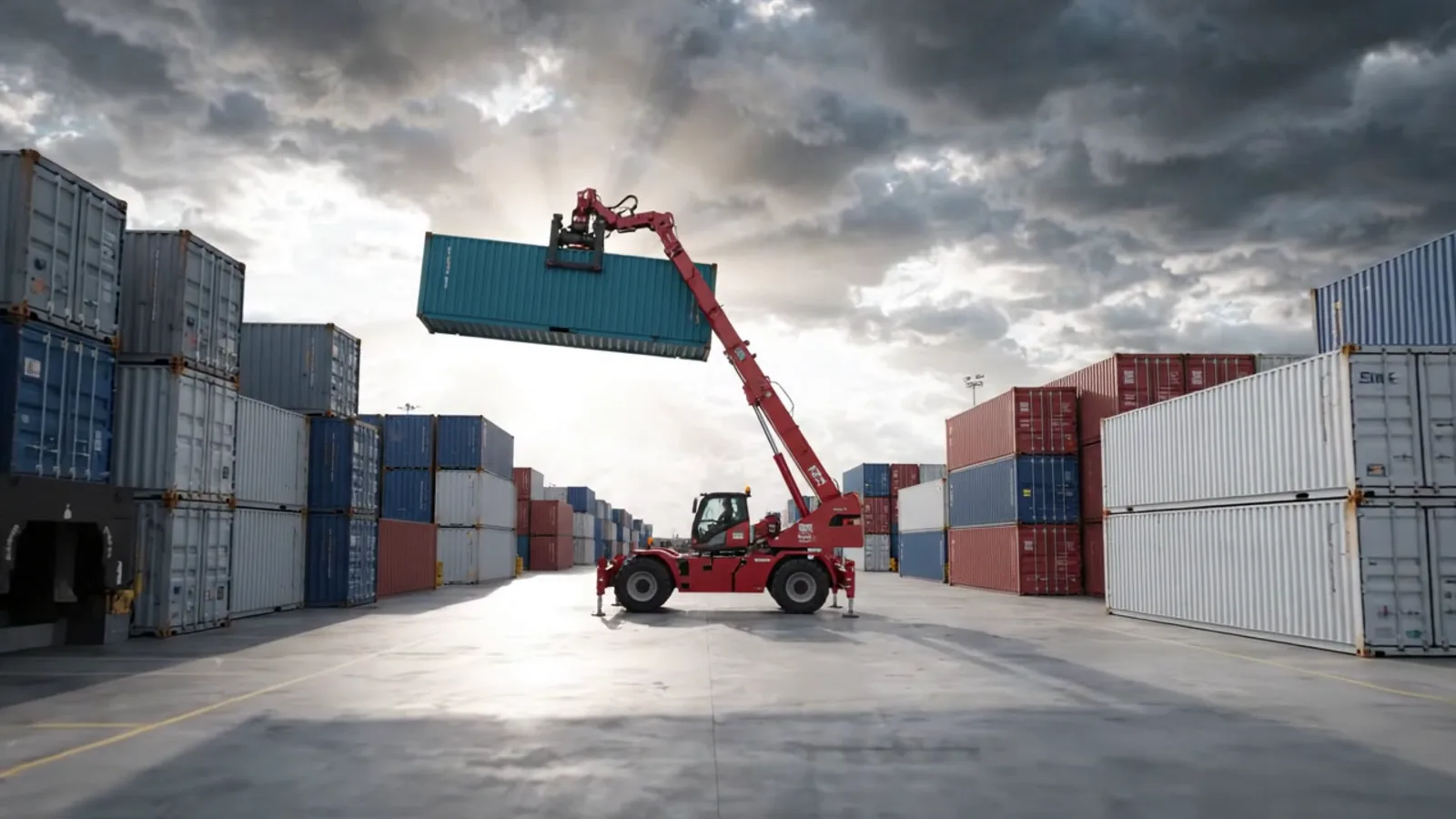
The considerations below describe the shipment characteristics commonly associated with an intermodal review. They are preliminary. Final suitability depends on the lane, schedule, cargo, container, access, and operational requirements, and is confirmed after Alpha Petroleum reviews the shipment.
Intermodal is not automatically the right pathway for every lane. Share the origin, destination, cargo, timing, and equipment requirements so Alpha Petroleum can review the shipment and identify the appropriate service. Call (951) 545-7374.
Whether intermodal suits a shipment often depends on the relationship among distance, origin and destination access, shipment timing, cargo characteristics, container requirements, and first-mile and final-mile coordination. Select the profile that most closely matches your lane. These results provide preliminary guidance only. They are not a confirmed quote, a rate, a transit time, guaranteed equipment or capacity, a confirmation that rail service is available, or a final routing decision.
Preliminary pathway
Select a lane profile on the left and a preliminary pathway, the relevant considerations, the information still needed, and the next step will appear here. To discuss a lane now, call (951) 545-7374.
This lane profile contains characteristics commonly associated with an intermodal review: long-haul movement and containerized freight that can stay in the same container between transportation modes. Alpha Petroleum reviews the lane, cargo, schedule, and equipment before identifying a pathway.
Relevant considerations
Information still needed
Potentially related services
Long-haul movement within California can be worth comparing against a direct truckload pathway. Whether rail forms a useful segment depends on the specific lane, terminal access, and the timing the shipment allows.
Relevant considerations
Information still needed
Potentially related services
Port-connected freight may involve ship, rail, and truck transportation, with the container transferring between modes rather than the cargo being unloaded and reloaded. Terminal access, container availability, and the transportation resources required are reviewed for the specific move.
Relevant considerations
Information still needed
Potentially related services
Recurring volume and repeatable lanes are commonly associated with an intermodal review because the shipment profile stays consistent enough to plan around. Alpha Petroleum reviews the lanes, volume, and freight before discussing a coordinated approach.
Relevant considerations
Information still needed
Potentially related services
Shorter distances often make a direct truckload move worth comparing, because the first-mile and final-mile trucking and terminal transfers that intermodal requires may not be offset over a regional lane. Alpha Petroleum can review both pathways against the shipment requirements.
Relevant considerations
Information still needed
Potentially related services
Time sensitivity and fixed delivery appointments may make a direct truckload option worth comparing, because a multimodal plan involves terminal schedules and transfer coordination. Alpha Petroleum reviews the required delivery window against both pathways.
Relevant considerations
Information still needed
Potentially related services
Temperature-sensitive freight requires a refrigerated-service review before a pathway is identified. Whether the requirement can be met on a multimodal lane depends on the equipment, the route, and the handling the cargo needs.
Relevant considerations
Information still needed
Potentially related services
Oversized or unusually shaped cargo requires a flatbed or specialized-equipment review. Freight that does not fit or load into an intermodal container is normally handled on open-deck equipment rather than through a container move.
Relevant considerations
Information still needed
Potentially related services
Bulk, chemical, petroleum-related, and hazardous cargo require an operational review. Handling, equipment, and regulatory requirements determine the appropriate service, and the same compliance discipline Alpha Petroleum applies to bulk and hazmat freight applies to any multimodal move.
Relevant considerations
Information still needed
Potentially related services
A pathway cannot be suggested without a little more detail about the lane and the shipment. Gather what you can from the checklist below, or call Alpha Petroleum and the team can work through it with you.
Relevant considerations
Information still needed
Potentially related services
This is how a container move generally runs, from the first lane review through delivery and invoicing. The exact workflow depends on the lane, cargo, container, equipment, and site access. The stages below stay visible whether or not you expand them, and do not promise a specific rate, capacity, transit time, rail availability, terminal, carrier, or pickup date.
Alpha Petroleum reviews the origin, destination, cargo, timing, container, equipment, and site-access requirements you provide.
A truck moves the container from the pickup location to the appropriate transfer point or terminal when the approved route requires it.
Rail handles the long-haul inland segment of the lane where the approved transportation plan uses it.
The container moves between transportation modes without unloading and reloading the freight inside it.
A truck moves the container from the transfer point to the final delivery location.
Delivery, documentation, status communication, and invoicing follow the approved process.
Alpha Petroleum reviews the origin, destination, cargo, container, timing, and terminal coordination the move requires.
Where the route requires it, the container travels by ship as part of the sea and land movement.
The container is transferred between modes and moved by truck between the terminal and the next stage of the route.
Rail or road transportation carries the container across the inland portion of the lane, depending on the approved plan.
A truck moves the container from the transfer point to the final delivery location.
Delivery, documentation, status communication, and invoicing follow the approved process.
Alpha Petroleum coordinates the stages of a multimodal move with the transportation providers involved. The company does not own or directly operate every rail, ocean, terminal, or container asset on a lane, and which segments are performed directly rather than coordinated is confirmed during the lane review.
Freight mode selection may depend on lane length, timing, cargo, equipment, loading method, access, handling, and delivery requirements. Select a service to see how it compares with an intermodal container move. These comparisons are preliminary and do not imply that one mode is always cheaper, faster, safer, or more sustainable. Every crawlable service link stays available in the Related Freight Services section below.
Preliminary comparison
Select a service on the left to compare it with an intermodal container move across transportation pattern, cargo format, loading and transfer, equipment, scheduling, and the information needed for review.
Intermodal: a container may move by truck, rail, and potentially ship. The cargo normally remains inside the container between modes. First-mile and final-mile trucking must be coordinated. Suitability depends on the freight lane and shipment requirements, and final routing, capacity, timing, and pricing require review.
Truckload logistics: coordinated truckload capacity, dispatch, and shipment visibility across equipment types, moving freight over the road on a single pathway rather than transferring between modes.
Where the difference tends to matter
Preliminary conclusion
Information needed for review
Intermodal: the freight travels in an intermodal container that transfers between truck, rail, and potentially ship, with first-mile and final-mile trucking coordinated at each end.
Dry van trucking: enclosed transportation for general, non-perishable freight that fits and loads into an enclosed trailer, moving over the road without a mode transfer.
Where the difference tends to matter
Preliminary conclusion
Information needed for review
Intermodal: a container move across more than one transportation mode. Whether a temperature requirement can be maintained across transfers and dwell time on a given lane requires review.
Reefer trucking: refrigerated equipment for temperature-sensitive freight, with the temperature requirement maintained on a single over-the-road pathway.
Where the difference tends to matter
Preliminary conclusion
Information needed for review
Intermodal: the freight travels inside a container, so the cargo has to fit and load into that container to move on this pathway.
Flatbed trucking: open-deck transportation for oversized, heavy, and irregularly shaped freight that does not fit or load into an enclosed trailer or a container, with securement and any tarping handled for the load.
Where the difference tends to matter
Preliminary conclusion
Information needed for review
Intermodal: a containerized move across more than one transportation mode. Whether bulk or regulated material can move on a given intermodal lane requires operational review.
Bulk trucking and hazmat: bulk and regulated-material transportation with the equipment, handling, and compliance discipline the material requires.
Where the difference tends to matter
Preliminary conclusion
Information needed for review
Rail can provide a consistent long-haul segment for suitable freight lanes and may reduce the amount of over-the-road mileage required. Timing, fuel use, environmental impact, and shipment visibility depend on the route, carrier network, terminal operations, cargo, and service selected.
Railroad transportation can carry the primary long-distance segment while road trucking handles pickup and final delivery. Rail movement is less directly affected by highway congestion, while terminal schedules, network conditions, weather, and transfer coordination can still affect the shipment. Total transit time depends on the complete origin-to-destination plan rather than on the rail segment alone.
The freight stays inside the intermodal container between transportation modes, so the cargo is not offloaded and re-loaded at each transfer.
Alpha Petroleum provides real-time GPS-based shipment tracking through APT II Live Track across the whole journey. The tracking tag travels inside the container itself, so visibility continues from the point of origin to the destination regardless of which rail or ocean carrier is moving that segment.
Reducing long-haul road mileage may support fuel-efficiency and environmental goals for suitable freight lanes. Actual fuel use, carbon footprint, and environmental impact depend on the route and the transportation plan.

Intermodal transportation may offer a useful long-haul option for suitable lanes, but the results depend on the shipment. The considerations on the right are not reasons to avoid contacting Alpha Petroleum; they are the details that make a review useful.
Centralized support and scalable coordination across the shipment. Expand any item to see what it involves. The full list stays visible whether or not the panels are expanded. Capacity, equipment, routing, and timing are confirmed after reviewing the lane.
Alpha Petroleum reviews the freight details, the lane, and the potential mode pathway before identifying an approach.
Load tendering and dispatching are coordinated for the approved plan. Tendering a load is not a capacity commitment or immediate acceptance.
Real-time GPS-based shipment tracking through APT II Live Track covers the whole journey, so you keep sight of the freight from origin to destination. The tracking tag travels inside the container itself, which is why visibility holds regardless of which rail or ocean carrier is moving that segment.
Applicable shipment paperwork is coordinated and the move is invoiced through the existing process, so the paperwork keeps pace with the freight.
One-time shipments, recurring lanes, and higher-volume programs can be discussed and planned around the lanes involved.
Intermodal moves can be coordinated with truckload logistics, dry van, reefer, flatbed, and bulk and hazmat transportation when a program needs more than one pathway.
If intermodal does not appear to fit the shipment, these services cover the other freight pathways Alpha Petroleum coordinates. Each one can be reviewed against the same lane and shipment details.
Accurate lane and cargo information helps Alpha Petroleum review the shipment and identify the right pathway. You do not need to classify hazardous materials, name a rail ramp, or know container specifications to start. Call (951) 545-7374 to discuss a lane.
You do not need every answer before contacting Alpha Petroleum, and unknown is a perfectly good answer. Gathering what you can from the list below helps the team review the lane and the shipment.
The details above form a useful shipment summary, for example: an intermodal lane review requested from Bakersfield, California, to an out-of-state destination, containing general containerized freight in one customer-loaded container, approximate weight unknown, pickup timing flexible, delivery requiring an appointment. Adding a summary to a quote request is not a rate, a capacity commitment, a transit-time guarantee, a rail-availability confirmation, or a cargo-acceptance decision; it gives Alpha Petroleum enough to review the lane and identify the next step. All prefilled details stay editable on the quote form.
The steps below describe the review process. They do not promise a quote turnaround time, capacity, rail availability, a specific transit time, a specific pickup date, real-time tracking, a particular carrier, a particular rail ramp or terminal, or guaranteed savings.
Alpha Petroleum reviews the origin, destination, cargo, timing, equipment, and access information provided.
The team considers whether intermodal, direct truckload, or a specialized freight service may fit the request.
Alpha Petroleum may ask for weight, dimensions, schedules, documents, handling requirements, or other operational details.
You receive the available next-step information supported by the actual sales and operations process.
Tendering, dispatch, transfers, first-mile and final-mile movement, and shipment communication are coordinated according to the approved scope.
Delivery status, paperwork, and invoicing follow the existing operational process.
Alpha Petroleum and Transport Inc. brings 25 years of experience to freight and logistics, based in Corona, California. Alpha Petroleum supports freight and transportation needs across Southern California and the Central Valley, with company location pages for Corona, Los Angeles, Bakersfield, and Santa Paula. Intermodal availability depends on the shipment lane, cargo, schedule, terminal access, and transportation resources required.
The same compliance discipline Alpha Petroleum applies to bulk and hazmat freight applies to intermodal moves. The dispatch line is staffed 24 hours a day, 7 days a week; that is a staffed phone line rather than a commitment to 24/7 intermodal pickup, capacity, or dispatch. Routing, capacity, timing, and pricing are confirmed after reviewing the lane.
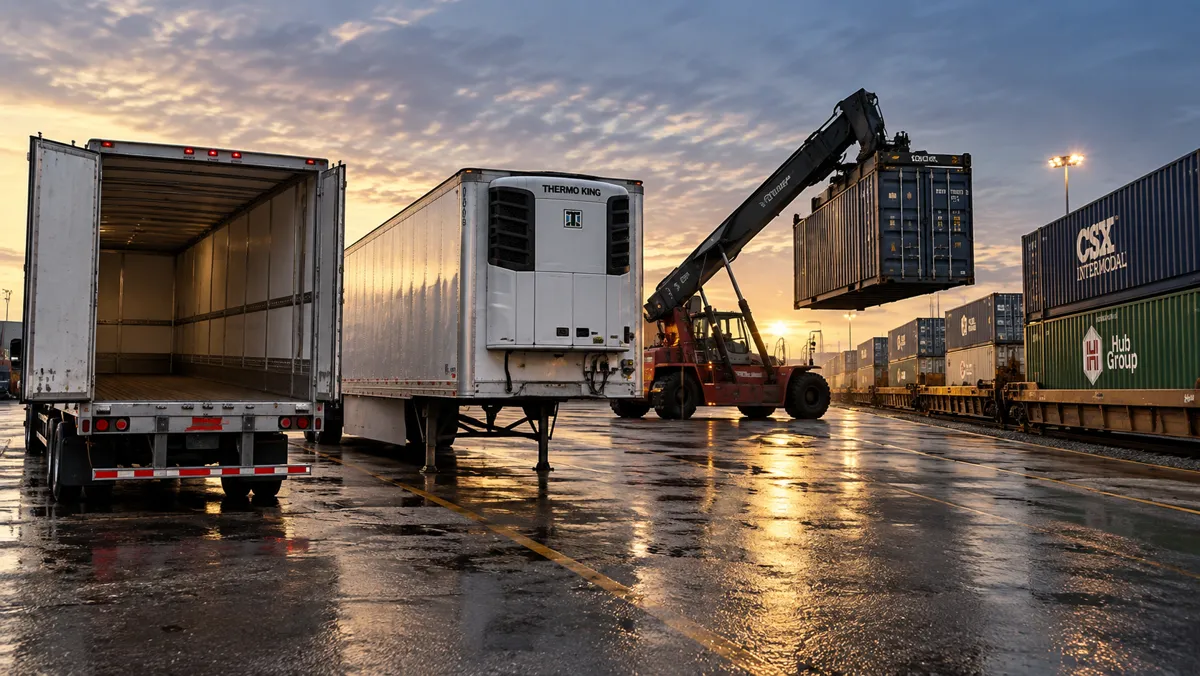
Intermodal freight transportation moves cargo in a single intermodal container that travels by more than one transportation mode, usually truck and rail, and ship and rail on port-connected routes. The container transfers between modes so the freight inside is not unloaded and reloaded at each stage.
No. The freight normally stays inside the same intermodal container while the container moves between transportation modes. Reduced cargo handling is one of the operational reasons shippers review intermodal for suitable lanes.
Intermodal may be worth reviewing when the shipment moves over a long-haul lane, the freight can travel in an intermodal container, the schedule allows coordinated truck and rail movement, and the origin and destination can support first-mile and final-mile trucking. Suitability depends on the lane, cargo, timing, and equipment and is confirmed after review.
Helpful details include the origin and destination, a description of the cargo, the approximate weight, the number of containers or loads, container or equipment requirements, requested pickup and delivery timing, appointment requirements, and any temperature-control, hazardous, oversized, or site-access considerations.
Yes. Alpha Petroleum reviews the lane and shipment requirements and can compare an intermodal pathway with truckload logistics, dry van, reefer, flatbed, and bulk or hazmat transportation to identify which service fits the shipment.
First-mile and final-mile trucking are coordinated as part of the shipment plan. The specific arrangement for a given lane, including which segments Alpha Petroleum performs directly and which are coordinated with other transportation providers, is confirmed during the lane review.
Alpha Petroleum supports freight and transportation needs across Southern California and the Central Valley, with company locations in Corona, Los Angeles, Bakersfield, and Santa Paula. Intermodal availability depends on the shipment lane, cargo, schedule, terminal access, and the transportation resources required.
Temperature-controlled, oversized, bulk, chemical, petroleum-related, and hazardous cargo require an operational review before a pathway is identified. Depending on the requirements, reefer trucking, flatbed trucking, bulk trucking and hazmat, or chemical transportation may be the appropriate service instead of an intermodal move.
Alpha Petroleum provides real-time GPS-based shipment tracking through APT II Live Track across the whole journey. The tracking tag travels inside the container itself, so visibility continues from the point of origin to the destination regardless of which rail or ocean carrier is moving that segment.
No. Cost and transit performance depend on the lane and the shipment and require review. Truck and rail intermodal may provide advantages on some domestic freight lanes, but transit time depends on the route, schedules, terminals, carriers, cargo, and first-mile and final-mile requirements.

Share the shipment origin, destination, cargo, approximate weight, timing, and container or equipment requirements. Alpha Petroleum will review the lane and discuss whether intermodal or another freight service appears appropriate.
Intermodal not the right fit?Compare truckload logistics, dry van, reefer, and flatbed.